
Store Traffic Analytics Malaysia: A Privacy-First Pilot Plan for Electronics Retail
Key takeaways
- Treat privacy as a testable pilot acceptance condition tied to the exact configured fields, logs, purposes and access routes.
- Start with one operational question, one entrance and one demonstration island, then validate results by scenario.
- Use buyer-owned accept, remediate or stop criteria agreed before observation begins.
Malaysian electronics retailers considering store traffic analytics face two linked questions: will the pilot produce dependable operational evidence, and will its actual data handling withstand privacy review? A credible store traffic analytics Malaysia pilot should answer both before anyone discusses rollout.
That means treating privacy as a testable acceptance condition, not a general promise. The buyer should be able to inspect what the configured system observes, generates, stores, exports and deletes. Operations teams should also be able to show that the metrics answer a defined store question. A pilot that clears only one of those tests is not ready to scale.
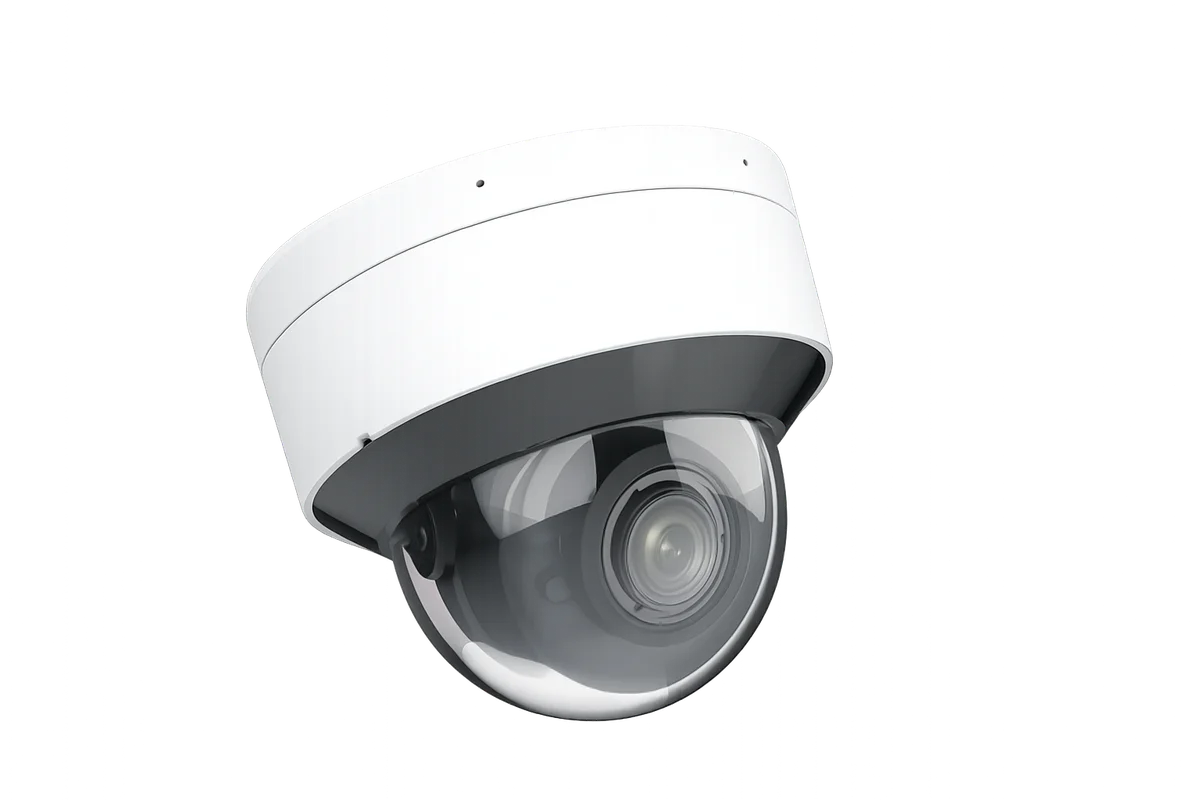
xTrack
xRetail's shopper intelligence offering for store traffic and shopper-behaviour analysis.
Learn More →This guide sets out a stage-gated approach for an electronics retailer. The example scope is deliberately narrow: one store, one entrance and one laptop demonstration island. It is a practical starting point for procurement, IT, operations, legal and data protection teams to agree on evidence before observation begins.
Why privacy belongs inside pilot acceptance
Electronics stores create demanding measurement conditions. Customers pause around demonstration tables, compare devices, revisit displays and speak with staff. Employees may cross the same area repeatedly. Product fixtures, groups of people and changing sightlines can affect observations. A blended accuracy figure can conceal these conditions instead of explaining them.
Privacy scrutiny must be equally specific. An aggregate count, a retained image, a persistent identifier and a linked movement record do not create the same processing profile. A buyer cannot decide how Malaysia's Personal Data Protection Act 2010, as amended, applies by relying on a product category or a vendor label. The configured fields, logs, purposes, linkability and access routes matter.
Malaysia's Personal Data Protection (Amendment) Act 2024 introduced changes including the terminology of data controller, direct security obligations for processors, data protection officer provisions, breach notification provisions, data portability and revised cross-border transfer rules. The amendments commenced in phases during 2025 under P.U. (B) 522. The practical procurement lesson is not that every pilot has the same legal outcome. It is that the retailer must document the processing design and obtain appropriate legal or data protection review.
The Department of Personal Data Protection's 2026 Data Protection Impact Assessment Guideline adds a structured assessment framework. It identifies quantitative triggers and also calls for qualitative judgment in situations including systematic monitoring, location or behaviour tracking, innovative technology and high-risk profiling. It gives retail examples involving facial recognition for loyalty identification and continuous app-based tracking of movement and dwell. Those examples should not be read as a rule that every aggregate footfall pilot requires a DPIA. The retailer's DPO or counsel should screen the actual design against the final guidance and applicable law.
Store traffic analytics Malaysia pilots should start with one decision
A useful pilot begins with an operational question, not a catalogue of available metrics. For an electronics store, a question might be: during agreed trading windows, what proportion of observed entrance traffic reaches the laptop demonstration island?
That question establishes a clear measurement boundary. It does not claim to identify a person, prove purchase intent or explain why someone approached a display. It tests whether defined, aggregated observations can support a practical store decision, such as comparing demonstration-island engagement across time periods or reviewing service-area coverage.
Write the question into the pilot charter. Name the entrance, the demonstration zone, the trading windows, the excluded conditions and the people authorised to approve changes. If the team later proposes identity-based recognition, cross-visit linking or a new data source, treat that as a scope change requiring separate approval rather than quietly extending the pilot.
Define the processing boundary before procurement approval
Ask the vendor for a data-flow diagram and field inventory for the exact configuration being tested. Procurement should be able to trace data from collection to deletion, including intermediate and diagnostic data rather than only the final report.
The record should answer:
What is observed at the entrance and demonstration island?
Are images or video processed, transmitted or retained at any point?
What aggregate records, event records, identifiers, timestamps and logs are created?
Could any field identify, single out or become linkable to a person?
Where does each processing step occur, including storage and remote support?
Who can access each field, for what purpose and with which approval?
Which processors or subprocessors participate?
What are the retention, deletion, export and backup rules?
What happens to data, credentials and derived records when the pilot ends?
How are incidents identified, escalated and communicated?
Do not accept “anonymous”, “local” or “compliant” as self-proving descriptions. Require evidence tied to the deployed configuration and have the retailer's responsible specialists review it.
A six-gate retail analytics pilot Malaysia teams can use
Gate 1: Scope
Limit the pilot to one named store, one named entrance and one laptop demonstration zone. Fix the observation windows and list responsible owners from operations, IT, procurement and privacy or legal. State that identity-based use is excluded unless it receives separate review and approval.
Define success in buyer language. One criterion could be that the team can compare entrance traffic with observed demonstration-zone engagement for agreed periods, with known exclusions. Avoid inserting universal accuracy or uplift targets. No official Malaysian source reviewed for this guide establishes a general electronics-retail benchmark.
Gate 2: Pre-pilot governance
Before collection starts, document the purpose, field inventory, data flow, controller and processor roles, proposed lawful basis, notice decision, retention schedule, access matrix, processing locations, cross-border considerations and incident contacts.
Complete DPIA screening against the final 2026 guideline. That screening should record both quantitative criteria and qualitative factors. The guideline assigns responsibility for the DPIA to the controller, expects reasonable processor assistance, and keeps ultimate responsibility with senior management. It also supports involving relevant stakeholders. This makes the assessment a retailer-owned governance decision, supported by vendor evidence.
Confirm separately whether the retailer meets current DPO appointment conditions and whether the relevant commercial activity falls within a registration class. Store count alone does not answer either question.
Gate 3: Measurement validation
Run matched manual observations during agreed scenarios: normal flow, crowded periods, repeated staff movement and partial occlusion around displays. Define the manual method, time synchronisation, observer instructions and exclusions before testing.
Report variance by scenario rather than presenting one blended number. Record what happened when a group entered together, an employee crossed repeatedly or a fixture obstructed the observation area. A result is useful when buyers understand where it is dependable and where operating conditions limit interpretation.
Any thresholds should be buyer-set and explicitly illustrative. For example, a retailer might decide before testing that a scenario exceeding its agreed variance tolerance must be remediated and retested. That tolerance is neither Malaysian law nor an xRetail performance claim.
Gate 4: Privacy controls
Compare the live outputs, logs and administrative views with the approved field inventory. Test least-privilege access using the actual pilot roles. Verify retention and deletion behaviour, including how backups or diagnostic records are treated. Exercise the export and contract-exit process so the retailer knows what it receives and what the vendor removes.
Test the incident route as a tabletop exercise. Malaysia's 2025 data breach notification guidance describes notification to the Commissioner within the prescribed 72 hours when the applicable threshold and rules are met. Do not turn that into an unconditional slogan. The retailer should verify the applicable trigger, timing and responsibilities for its circumstances, then document identification, escalation, containment, communication and review steps.
If any processing or support route crosses borders, assess it against the current official cross-border transfer requirements. Confirm actual storage countries, remote access routes and subprocessors rather than assuming them from a vendor's headquarters or sales material.
Gate 5: Operational usefulness
Test whether the output answers the original buyer question. Can operations compare the agreed entrance and demonstration-island observations by time window? Are the exclusions visible enough to prevent false confidence? Can store managers distinguish an observation from an interpretation?
Movement alone does not establish identity, purchase intent or satisfaction. The pilot report should separate measured facts from hypotheses. If the team believes a layout, staffing or merchandising change deserves testing, treat it as a new operational experiment rather than a conclusion about individual shoppers.
Gate 6: Decision
Finish with one of three outcomes: accept, remediate or stop. Make the decision against criteria agreed before observation, and record the evidence reviewed, residual risks, exceptions and accountable approver.
Accept only if both operational and privacy gates pass. Remediate when a bounded defect has an owner, deadline and retest method. Stop when the system cannot answer the defined question, the processing differs materially from the approved design, or unresolved risk exceeds the retailer's tolerance.
A practical responsibility matrix
Business question and scope; accountable retailer owner: Retail operations; vendor contribution: Feasibility input; acceptance evidence: Signed pilot charter.
Data inventory and flow; accountable retailer owner: Data controller with DPO, legal or privacy input; vendor contribution: Complete technical disclosure; acceptance evidence: Approved field inventory and diagram.
Measurement validation; accountable retailer owner: Retail operations; vendor contribution: Scenario results and exclusions; acceptance evidence: Matched observation record.
Access, retention and deletion; accountable retailer owner: IT or security with privacy input; vendor contribution: Configuration evidence and test support; acceptance evidence: Access and deletion test record.
Cross-border assessment; accountable retailer owner: Data controller with counsel or DPO input; vendor contribution: Locations, support routes and subprocessors; acceptance evidence: Documented assessment.
Incident readiness; accountable retailer owner: Security and incident owner; vendor contribution: Escalation contacts and processor procedure; acceptance evidence: Tabletop record and contact route.
Final decision; accountable retailer owner: Named senior accountable approver; vendor contribution: Remediation commitments if needed; acceptance evidence: Accept, remediate or stop record.
The exact titles will vary by organisation. The important point is that the retailer owns the purpose, risk decision and acceptance outcome. Vendor input supports those decisions; it does not replace them.
Procurement questions that reveal whether a pilot is ready
Use the following questions in the request for proposal, security review or pilot workshop:
1. Can you provide a diagram covering collection, processing, storage, support access, export and deletion for this configuration?
2. Which fields and logs exist before aggregation, after aggregation and during troubleshooting?
3. Can any record identify, single out or be linked to a person, device, account or visit?
4. Where does every processing step occur, and which subprocessors or remote-support teams are involved?
5. Which roles can access each data type, and how are approvals and access events recorded?
6. How are retention periods configured, verified and applied to backups and diagnostic material?
7. What assistance will you provide for DPIA work, data subject requests, incidents, audits and contract exit?
8. How will accuracy and exclusions be reported separately across normal, crowded, staff-movement and occlusion scenarios?
9. What changes would alter the approved processing boundary, and how will the retailer be notified before they occur?
10. At exit, what is returned, what is deleted, what may remain and what evidence confirms completion?
Clear answers make comparison easier. They also reduce the risk that commercial evaluation, operational testing and privacy review proceed from different assumptions.
From pilot evidence to a controlled next step
A privacy-first pilot is not a claim that risk has disappeared. It is a disciplined way to make the processing visible, assign ownership and test controls alongside operational value.
For electronics retailers assessing footfall analytics Malaysia options, a narrow initial scope can produce better evidence than a broad technology trial. One entrance and one demonstration island are enough to test whether the measurement answers a real question, whether difficult store conditions are disclosed and whether the configured data handling matches the approved design.
xTrack is xRetail's shopper intelligence offering for store traffic and shopper-behaviour analysis; product information is available at /products/xtrack-dome.
The next step is a scoped pilot workshop that produces a buyer-owned measurement plan, a documented set of data-flow questions and acceptance criteria agreed before collection begins.
Planning a retail analytics pilot in Malaysia? Request a scoped workshop to define the operational question, data-flow evidence and buyer-owned acceptance criteria before collection begins. Visit /contact.
Frequently Asked Questions
Does every store traffic analytics pilot in Malaysia require a DPIA?
Do not assume either way. The retailer should screen the actual processing design against applicable law and the final 2026 DPIA Guideline, including its quantitative criteria and qualitative factors. The controller remains responsible, with input from the DPO, counsel and relevant stakeholders as appropriate.
Is aggregate footfall data automatically outside Malaysia's personal data rules?
No blanket conclusion should be made from the output label. Review the full configuration, including source material, intermediate data, identifiers, linkability, logs, retention and purposes. Obtain technical and legal review before describing data as anonymous, non-personal or exempt.
What should an electronics retailer validate manually?
Use matched observations across normal flow, crowded periods, repeated staff movement and partial occlusion. Record results and exclusions by scenario. Any buyer-set tolerance should be labelled illustrative, not a legal requirement or market benchmark.
Who owns the pilot's privacy decision?
The retailer, as the party determining the purpose and means in its context, must establish the relevant roles and accountability. The 2026 DPIA Guideline places DPIA responsibility on the controller, expects reasonable assistance from processors and states that senior management retains ultimate responsibility.
Should a buyer require data to remain in Malaysia?
The buyer should first establish where every processing, storage and support activity actually occurs. If personal data may cross borders, assess the arrangement against current Malaysian requirements. Do not infer localisation from marketing language or company location.
What is a good final pilot outcome?
Use accept, remediate or stop. Acceptance should require operational usefulness and verified privacy controls. Remediation needs an owner and retest method. A stop decision is appropriate when the defined question cannot be answered or material risk remains unresolved.
Sources
- Malaysia Personal Data Protection (Amendment) Act 2024, Act A1727. Royal assent 9 October 2024; Gazette publication 17 October 2024.
- Federal Government Gazette P.U. (B) 522. Dated 19 December 2024; published 24 December 2024. It appointed phased commencement dates of 1 January, 1 April and 1 June 2025 for specified amendment sections.
- Department of Personal Data Protection, Data Protection Impact Assessment Guideline, 2026. Exact day not stated in the reviewed official material.
- Department of Personal Data Protection, Data Protection By Design Guideline, 2026. Exact day not stated in the reviewed official material.
- Department of Personal Data Protection, Personal Data Protection Guidelines on Data Breach Notification, 2025.
- Department of Personal Data Protection, Guidelines on the Appointment of Data Protection Officer, 2025.
- Department of Personal Data Protection, Cross-Border Transfer of Personal Data guidance, current official source page reviewed for this article.
Related Articles
Continue exploring insights from xRetail Solutions

Retail analytics Indonesia: Reading Footwear Store Visits Beyond the Fitting Bench
October 29, 2026
Retail Analytics Philippines: Staffing Toy Stores for Family Visits
October 27, 2026
Retail Analytics Thailand: From Optical Trade Events to Store-Level Decisions
October 23, 2026Ready to Transform Your Retail Operations?
Explore how xRetail Solutions connects shopper intelligence, resilient store networks, and unified operations visibility for modern retail teams.
Contact Our Team